

- About EMA
- Our Energy Story
- Consumer Information
- Regulations & Licences
- News & Events
- Partnerships









eSERVICES
Get quick access to EMA’s services for application of worker licences, scholarships and more.
Share


We thank Mr Ronald Lee Yew Kee for his letter (Find ways to produce cheaper electricity; March 14) in which he asked if electricity could be produced more cost-effectively.
In 2000, 77 per cent of electricity in Singapore was produced using fuel oil. Since then, the Energy Market Authority has introduced competition to the electricity market.
This has spurred the generation companies to switch to natural gas, which is cleaner and more cost-efficient.
Today, more than 95 per cent of electricity is produced using natural gas. We have also introduced greater competition in the gas market through the import of liquefied natural gas.
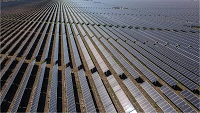
Mr Lee suggested deploying more solar energy in Singapore. Solar energy is green, helps to diversify our energy sources and adds to market competition.
We thus plan to raise adoption of solar energy from 126 megawatt peak (MWp) currently to 1,000 MWp beyond 2020, which is equivalent to powering 200,000 four-room HDB flats for a year.
Juliana Chow
Director
Corporate Communications Department
Find ways to produce cheaper electricity - Mr Ronald Lee Yew Kee
14 March 2017
I live in a five-room HDB flat and had backed those who expressed disapproval when the Government proposed raising water rates by 30 per cent.
However, after I studied my monthly utility bills recently, I discovered that, on average, I pay only $12 for water, out of my $76 bill.
After the 30 per cent increase and subsidies, my bill will rise by less than $3.60.
The water price rise is not an issue for me anymore. I was surprised to find that the biggest component of my bill is electricity, at $44 a month.
Why are we not able to produce electricity at a lower cost? It seems like nothing much has been done to produce cheaper electricity.
Perhaps it may be useful to mandate that all new private buildings, factories and HDB blocks must have solar panels to produce energy for their own consumption.
Our universities should come up with solutions. We can also learn from countries similar to ours.
In years to come, electricity will be as important and existential a commodity as water.