





For more information, please refer to:


- About EMA
- Our Energy Story
- Consumer Information
- Regulations & Licences
- News & Events
- Partnerships
eSERVICES
Get quick access to EMA’s services for application of worker licences, scholarships and more.
Media Releases
26 Oct 2026
Share


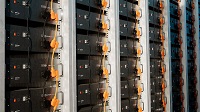
- The Energy Market Authority (EMA) has launched an Energy Storage Systems Vision and Industry Consultation Paper, calling on the industry to propose practical energy storage technologies, business models, and projects that can be commercially deployed at scale. Singapore aims to triple its energy storage capacity from about 350 megawatt-hours (MWh) today to around 1 gigawatt-hour (GWh) by 2030.
- Singapore’s power system is changing. Electricity demand is expected to grow rapidly over the next several years, driven by new large demand loads such as semiconductors, data centres, and electrification of the transport system. The use of renewable energy such as domestic solar is also likely to continue its strong momentum. The increase in large discrete loads, coupled with the larger impact of solar intermittency, can make it more difficult to maintain the current high standards of reliability of the Singapore power system. These developments increase the need for flexibility – the ability to adjust electricity supply and demand when needed.
- ESS can help Singapore’s power system respond to changing electricity needs in several ways:
- Strengthening power system reliability: ESS can respond quickly to fluctuations in solar generation and other supply disruptions to help maintain the power system’s stability.
- Managing electricity demand when network capacity is limited: Should there be high demand for electricity in some areas of Singapore, such as through increased electricity demand for electric vehicle charging, the electricity that an ESS has stored can be released to meet the additional demand. This would reduce the strain on the electricity network.
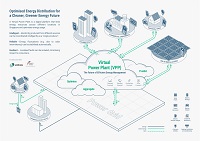
- Harnessing smaller ESS to support the power system: ESS in homes, businesses, and electric vehicles could be coordinated to collectively support Singapore's power system, including through arrangements known as Virtual Power Plants (VPP).
- Puah Kok Keong, Chief Executive of EMA, said: "Singapore’s need for flexibility in the power system is growing. We would like to partner companies to turn promising ideas into commercially viable energy storage solutions that can be deployed at scale. By doing so, we can strengthen power system reliability while making better use of every storage.
- EMA will work with the industry and relevant agencies to improve access to energy market information, review existing rules, and explore ways for ESS to support Singapore's electricity needs more effectively. EMA will also develop requirements for how ESS operate and enable them to be centrally controlled when needed, depending on their size and role in the power system.
- As part of this effort, EMA invites the industry to propose technologies, business models, and projects that can address power system needs and support wider ESS deployment. Feedback is also welcomed on existing rules, technical requirements, infrastructure constraints that may hinder ESS deployment, and how these could be addressed.
- To support continued collaboration, EMA is also seeking industry interest in forming an industry-led Energy Storage Workgroup to share experiences, develop practical solutions and address common barriers to ESS deployment.
- The Consultation Paper can be found at https://www.ema.gov.sg/our-energy-story/energy-grid/energy-storage-systems. Interested parties are invited to share their views and proposals by 29 January 2027 via EMA_Energy_Storage@ema.gov.sg.
How Energy Storage Can Support Singapore's Power System
Call for Industry Solutions