






About EMA

Join Us

Explore the career, scholarship and internship opportunities available in EMA.

  • Experienced Professionals
  • Early Careerists
  • Scholars

Our Energy Story

Overview

Discover how the Singapore Energy Story sets the vision towards a net-zero energy future.

Energy Supply

Gain insights on the power behind Singapore’s economy and our daily lives.

Energy Demand

Discover ways to enhance energy efficiency and lower your carbon footprint.

Energy Grid

Explore how EMA ensures a reliable and secure energy supply for everyone.

Energy Market Landscape

Learn about the intricacies of Singapore’s energy market structure and operations.

Consumer Information

Energy Prices in Singapore: What You Need to Know

Learn how global fuel disruptions affect Singapore's electricity prices and explore ways to reduce energy costs.

Electricity

Get tips on buying electricity and protecting your family from electrical hazards.

Gas

Learn about purchasing gas and safeguarding your family against gas hazards.

Solar

Access information on installing solar panels at your home and selling excess electricity to the national grid.

Regulations & Licences

Regulations

Stay up-to-date with the latest regulations, policies and frameworks governing the energy sector.

Licences

Learn about the licences that EMA issues to different stakeholders in the energy sector.

Regulatory Publications

Read about the Codes of Practice and Circulars that EMA publishes to regulate the energy sector.

Partnerships

Calls for Proposal

Collaborate with EMA in co-creating innovative solutions for the energy sector.

Consultations

Give your comments and feedback on EMA’s policies and regulations.

R&D Engagements

Discover how EMA works with stakeholders to catalyse new and innovative digital technologies.

Talent Development

Learn about EMA’s efforts in nurturing talent and cultivate interest in the energy sector.

eSERVICES

Get quick access to EMA’s services for application of worker licences, scholarships and more.

Government officials will NEVER ask you to transfer money or disclose bank log-in details over a phone call. Call the 24/7 ScamShield Helpline at 1799 if unsure. For more information on how to protect yourself against scams, please visit www.scamshield.gov.sg.

An Electrical Safety Inspector's View: Everyday Habits for a Safer Home

08 Jun 2026
Featured Stories 08 Jun 2026

Most of us do not give much thought to electrical safety at home – until a power trip or faulty appliance disrupts our daily lives. But for Nick Yang and Ivan Lee from Energy Market Authority’s (EMA) Inspectorate Department, electrical safety is something they pay attention to every day, both at work and at home.

Nick and Ivan are part of the team that inspects electrical installations across Singapore to help ensure they are safe for workers, residents and the public. Their work takes them to construction sites, warehouses, event grounds and residential estates – environments where electrical systems must operate reliably and safely.

“We see ourselves as electrical detectives,” Nick said. “One of our roles is to look into feedback from the public and stakeholders on possible electrical safety issues, and work with Licensed Electrical Workers (LEWs) to resolve issues early before they become serious incidents.”
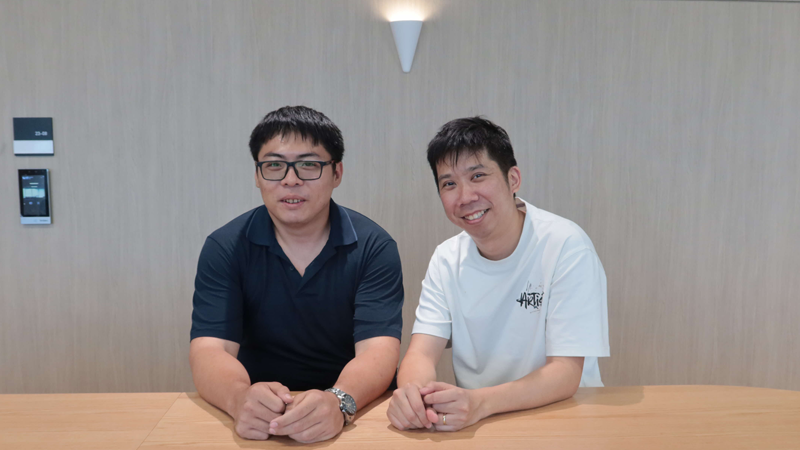
Ivan Lee (left) and Nick Yang from the Inspectorate Department, share tips on how to identify and spot electrical risks at home.

Spending so much time identifying risks has also shaped how Ivan and Nick approach electrical safety at home. Here are some habits they practise and recommend for every household.

Pay Attention to Everyday Warning Signs

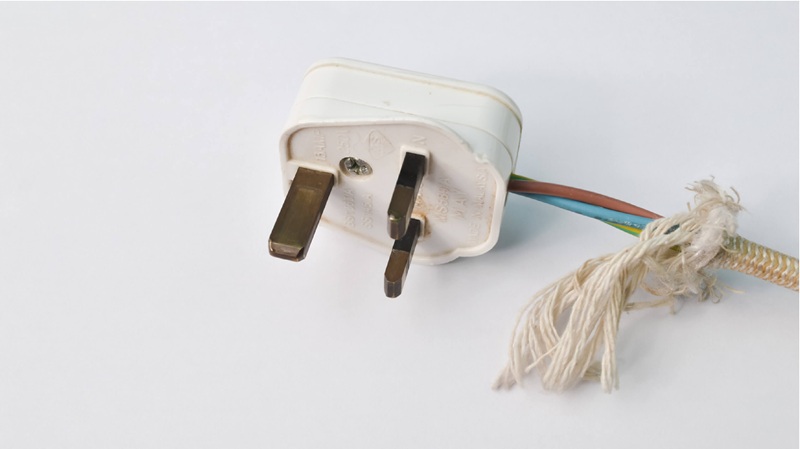
One of the first things Nick looks out for at home is the condition of his electrical appliances. Damaged cables or burnt marks are clear warning signs that should not be ignored, and when he notices them, he replaces the affected appliances as soon as possible.

Frayed or cracked wires are considered a fire hazard and should be replaced.

“Electrical hazards don’t happen overnight,” he explained. “Small warning signs should be taken seriously, as they can lead to bigger problems and risks over time.”

Nick also advised homeowners against troubleshooting electrical faults, such as frequent tripping, on their own. Purchasing electrical components, such as circuit breakers or cables, online for DIY replacement may also pose safety risks. Instead, he advises engaging a Licensed Electrical Worker (LEW) to properly diagnose and resolve electrical issues. This helps ensure that all electrical works are carried out safely and in compliance with Singapore’s standards, safeguarding the safety of occupants in the premises.

Ivan agreed, sharing that LEWs are the right people to call in such situations. “These are competent persons and will test the installation to make sure everything is safe before turning the power back on,” he said.

Develop Good Electrical Habits

For Ivan, one common electrical risk at home is overloading power sockets. Plugging too many appliances into the same extension cord can cause overheating, increasing the risk of electrical fires.

“There is no fixed ‘correct number’ of appliances you can plug in, as each appliance’s power consumption differs. Two induction cookers, for example, will draw much more power than two laptop chargers,” he pointed out. 

Homeowners should therefore be mindful of the types of appliances connected to the same outlet and avoid using multiple high-power appliances on a single socket.

Nick also makes it a habit to switch off chargers when they are not in use. “I avoid charging devices overnight, and try to remember to turn off the power,” he said.

The One Device That Protects Your Entire Home

Both officers also highlight the importance of the Residual Current Circuit Breaker (RCCB), a safety device that must be installed in all homes.

RCCBs are electrical safety devices that immediately cut off electricity supply upon detecting current leakages that may lead to electric shocks.

Nick explained that the RCCB works by monitoring the flow of electrical current.

“The RCCB is actually a device that measures the current back and forth,” he said. “If the current flowing into a circuit does not match the returning current, it could indicate that  current is leaking somewhere within the circuit. In such cases, the RCCB detects this imbalance and automatically cuts off the electricity supply.”

Such leakage can be caused by faulty appliances, loose connections or wiring issues.  When the RCCB trips, it serves as an important safety warning that should not be ignored. While homeowners can unplug the suspected appliance to see if the issue persists, proper diagnosis and repair should be carried out by a LEW if the issue continues or if the cause remain unclear.

Both Ivan and Nick also emphasised the importance of testing the RCCB regularly – ideally once a month – to ensure it is working properly. 

Homeowners can test their RCCB in three simple steps

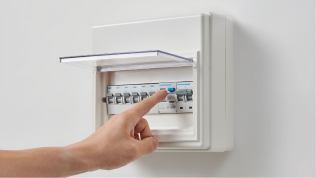
Step 1: Locate the RCCB in your distribution board and click the “test” button. The switch should flip down, cutting off the power supply in your home. 

Step 2: Check the lights and power sockets. If the RCCB is working properly, the lights and appliances should not turn on. 

Step 3: Switch off all lights and power socket before flipping the RCCB switch back up to restore power.

If any circuits remain powered when the RCCB switch is flipped down, they are not protected by the RCCB.

In such cases, Ivan and Nick recommend engaging an LEW to inspect the installation. 

How to test a Residual Current Circuit Breaker (RCCB) at home


“Most wiring is hidden, so you can’t assess safety just by looking,” Ivan noted. 

Nick agreed that professional checks are important, especially when warning signs appear. 

“If you are experiencing frequent power trips or have any electrical safety concerns, it’s worth engaging an LEW to carry out the necessary safety checks. It may come at a cost, but it’s a worthwhile investment for your safety and that of your loved ones,” he shared.

Enjoyed this read?

Join our EMA website mailing list here to receive the latest stories and updates directly to your inbox. Stay informed about recent developments and content from EMA.


Tags

{{ event }}