







About EMA

Join Us

Explore the career, scholarship and internship opportunities available in EMA.

  • Experienced Professionals
  • Early Careerists
  • Scholars

Our Energy Story

Overview

Discover how the Singapore Energy Story sets the vision towards a net-zero energy future.

Energy Supply

Gain insights on the power behind Singapore’s economy and our daily lives.

Energy Demand

Discover ways to enhance energy efficiency and lower your carbon footprint.

Energy Grid

Explore how EMA ensures a reliable and secure energy supply for everyone.

Energy Market Landscape

Learn about the intricacies of Singapore’s energy market structure and operations.

Consumer Information

Energy Prices in Singapore: What You Need to Know

Learn how global fuel disruptions affect Singapore's electricity prices and explore ways to reduce energy costs.

Electricity

Get tips on buying electricity and protecting your family from electrical hazards.

Gas

Learn about purchasing gas and safeguarding your family against gas hazards.

Solar

Access information on installing solar panels at your home and selling excess electricity to the national grid.

Regulations & Licences

Regulations

Stay up-to-date with the latest regulations, policies and frameworks governing the energy sector.

Licences

Learn about the licences that EMA issues to different stakeholders in the energy sector.

Regulatory Publications

Read about the Codes of Practice and Circulars that EMA publishes to regulate the energy sector.

Partnerships

Calls for Proposal

Collaborate with EMA in co-creating innovative solutions for the energy sector.

Consultations

Give your comments and feedback on EMA’s policies and regulations.

R&D Engagements

Discover how EMA works with stakeholders to catalyse new and innovative digital technologies.

Talent Development

Learn about EMA’s efforts in nurturing talent and cultivate interest in the energy sector.

eSERVICES

Get quick access to EMA’s services for application of worker licences, scholarships and more.

Government officials will NEVER ask you to transfer money or disclose bank log-in details over a phone call. Call the 24/7 ScamShield Helpline at 1799 if unsure. For more information on how to protect yourself against scams, please visit www.scamshield.gov.sg.

Hidden Hazards: How Gas Inspections Help Keep You Safe

29 Sep 2026
Featured Stories 29 Sep 2026

A newly renovated restaurant looked perfectly safe. But hidden behind the kitchen equipment was a safety issue that could have prevented an important gas safety system from working as intended.

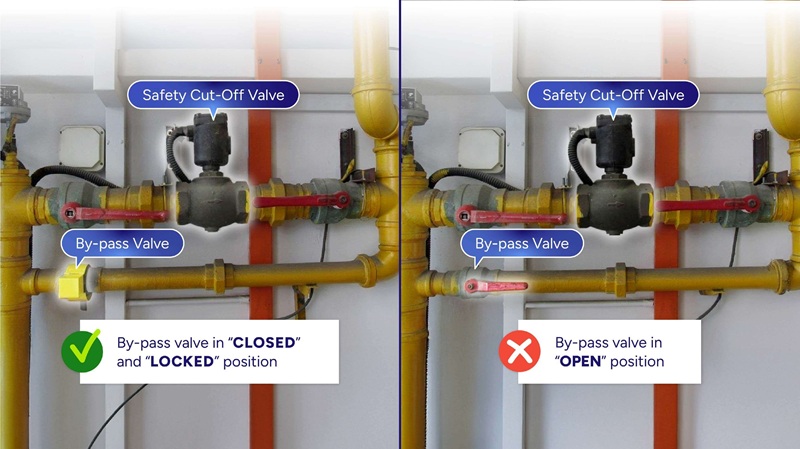
A by-pass valve had been left in the wrong position. Normally, if a gas leak is detected, the restaurant’s safety system automatically shuts off the gas supply. In this case, however, gas could have continued flowing through the by-pass valve instead, putting people at serious risk. Fortunately, the issue was detected and corrected before an incident occurred.

For Chow Chin Choeng, such incidents show why regular gas inspections matter. In his 25 years with the Energy Market Authority’s (EMA) Inspectorate Department, he has encountered situations where gas safety features were unknowingly disabled or not properly maintained.

Chow Chin Choeng, Senior Principal Engineer at EMA's Inspectorate Department

A Safety System Is Only Useful if It Can Work

Commercial kitchens that are not naturally ventilated have safety systems designed to automatically shut off the gas supply if a leak is detected, or if the ventilation system is not working properly.

This is known as a safety interlocking system. It links the gas detector, mechanical ventilation system, and safety cut-off valve. Together, they act like an emergency stop for the gas supply.

There is also a by-pass valve that allows trained professionals, such as Licensed Gas Service Workers, to temporarily keep the gas flowing when the safety system is being maintained. At all other times, the by-pass valve needs to be in the correct position so that the automatic safety system can do its job. 

Safety tip: ensure the by-pass valve for the interlocking system is closed and locked, so that the gas supply can be stopped during an emergency.

“If the by-pass valve is left open, the interlocking system cannot do its job properly. Some operators may not realise that the gas supply may not be automatically isolated when something goes wrong, increasing the risk of a gas-related incident,” Chin Choeng said.

Why Regular Inspections Matter

All gas installations in Singapore, from HDB flats and condominiums to landed homes and commercial buildings, must be inspected regularly. These checks help ensure that the gas installation remains safe and that potential gas leakage can be detected and rectified early.

This is important because many homes, businesses, and industries rely on piped town gas for their daily needs.

Who Needs to Arrange the Inspection?

Keeping a gas installation safe is a shared responsibility. Depending on the type of premises and the part of the installation involved, responsibility may fall to parties such as the property owner, occupier, Management Corporation, gas transporter, or gas consumer.

Under the Gas Act 2001, these responsible parties are known as Prescribed Persons. They must ensure that required actions and inspection deadlines specified in notification letters from SP PowerGrid Ltd are met in a timely manner. 

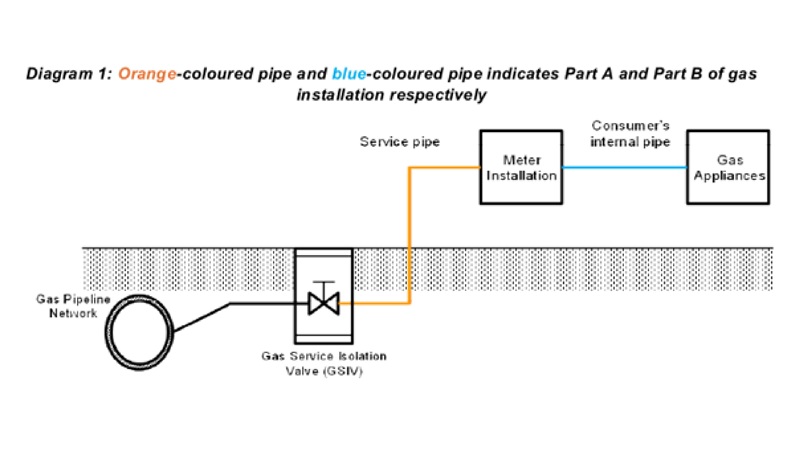
Responsibility for the inspection, maintenance, repair, and renewal of a gas installation is divided among the relevant Prescribed Persons overseeing either Part A or Part B of the gas meter installation.

The inspection must also be carried out by a Licensed Gas Service Worker or Professional Engineer. If the installation passes inspection, they will issue a Certificate of Fitness confirming that it is safe to use. The certificate must then be submitted to SP PowerGrid Ltd within 30 days of the inspection.

Since amendments to the Gas Act took effect on 1 September 2025, missing the inspection deadline or failing to submit the Certificate of Fitness is an offence. “The inspection regime is intended to safeguard users and the wider community,” Chin Choeng shared.

What EMA Does

EMA licenses gas service workers so that only competent persons are allowed to carry out gas service work, including inspections. EMA also oversees the regulatory framework, performs investigations, and takes enforcement action when necessary.

“Ultimately, our goal is to safeguard public safety,” Chin Choeng stressed. “The enhanced requirements reinforce the responsibilities of the relevant prescribed persons associated with each part of a gas installation.”

Hear From the Expert: Simple Steps to Prevent Accidents

Chin Choeng, 61, joined the water department in 1996 and later moved to the gas inspectorate when it was still part of the Public Utilities Board. After many years in gas safety, he believes that public awareness remains essential.

EMA has worked with SP PowerGrid Ltd to improve the frequency of notifications of gas inspections by carrying out earlier engagement and site visits. Regular reminders are important because some Prescribed Persons may not fully understand what they need to do after receiving a gas inspection notice.

A gas inspection helps ensure that hidden faults and potential leaks are detected early and rectified quickly. If you receive an inspection notice from SP PowerGrid Ltd, arrange for the gas inspection to be carried out prior to the deadline. Everyone should also know where their gas meter is located and keep City Energy’s 24-hour emergency hotline number handy – it can be found on the gas safety sticker affixed to the gas meter. 

Five Things to Know About Gas Safety

  • Know your responsibility. If SP PowerGrid Ltd notifies you that an inspection is due, arrange it by the stated deadline. Failing to do so is an offence.
  • Ask about the Certificate of Fitness. After the installation passes its inspection, the Licensed Gas Service Worker or Professional Engineer must submit the certificate to SP PowerGrid Ltd, within 30 days. If there is no certificate on record, the inspection may not have been completed or repairs may still be outstanding.
  • If you smell gas, act immediately. Shut the gas meter control valve and open the windows and doors. Do not operate electrical switches or light a flame. Call City Energy’s 24-hour hotline immediately at 1800 752 1800. Do not try to find the leak yourself.
  • Disconnect the gas supply before renovation work. Contact City Energy Pte Ltd to temporarily terminate the supply before commencing renovation works. Engage a Licensed Gas Service Worker for any gas service work.
  • Install concealed gas pipes properly. Gas pipes behind false ceilings must be installed by a Licensed Gas Service Worker and declared in the City Energy Pte Ltd’s application form for gas supply.

Gas safety depends not only on the systems in place, but also on the people who use, maintain and inspect them. Regular inspections – and knowing what to do when something is wrong – can help prevent a small issue from becoming a serious one.


Tags

{{ event }}