




About EMA

Join Us

Explore the career, scholarship and internship opportunities available in EMA.

  • Experienced Professionals
  • Early Careerists
  • Scholars

Our Energy Story

Overview

Discover how the Singapore Energy Story sets the vision towards a net-zero energy future.

Energy Supply

Gain insights on the power behind Singapore’s economy and our daily lives.

Energy Demand

Discover ways to enhance energy efficiency and lower your carbon footprint.

Energy Grid

Explore how EMA ensures a reliable and secure energy supply for everyone.

Energy Market Landscape

Learn about the intricacies of Singapore’s energy market structure and operations.

Consumer Information

Energy Prices in Singapore: What You Need to Know

Learn how global fuel disruptions affect Singapore's electricity prices and explore ways to reduce energy costs.

Electricity

Get tips on buying electricity and protecting your family from electrical hazards.

Gas

Learn about purchasing gas and safeguarding your family against gas hazards.

Solar

Access information on installing solar panels at your home and selling excess electricity to the national grid.

Regulations & Licences

Regulations

Stay up-to-date with the latest regulations, policies and frameworks governing the energy sector.

Licences

Learn about the licences that EMA issues to different stakeholders in the energy sector.

Regulatory Publications

Read about the Codes of Practice and Circulars that EMA publishes to regulate the energy sector.

Partnerships

Calls for Proposal

Collaborate with EMA in co-creating innovative solutions for the energy sector.

Consultations

Give your comments and feedback on EMA’s policies and regulations.

R&D Engagements

Discover how EMA works with stakeholders to catalyse new and innovative digital technologies.

Talent Development

Learn about EMA’s efforts in nurturing talent and cultivate interest in the energy sector.

eSERVICES

Get quick access to EMA’s services for application of worker licences, scholarships and more.

Government officials will NEVER ask you to transfer money or disclose bank log-in details over a phone call. Call the 24/7 ScamShield Helpline at 1799 if unsure. For more information on how to protect yourself against scams, please visit www.scamshield.gov.sg.

Understanding Advanced Nuclear Energy Technologies: How Singapore Is Assessing Its Potential

22 May 2026
Featured Stories 22 May 2026

Flip a switch, and the lights come on.

For most of us, electricity is something we rarely think twice about - it is simply there when we need it. But behind that everyday convenience is a constant balancing act: keeping energy reliable (so the lights stay on), affordable, and increasingly, cleaner.

In Singapore, this balance is becoming more complex. As the country works towards net zero, reducing emissions while keeping the power system stable and costs manageable is not straightforward, especially with limited space for large-scale renewable energy like solar.

So where do we go from here?

One option being carefully studied is nuclear energy.

Why Nuclear Energy Is Being Considered as a Reliable, Affordable, and Cleaner Energy Option

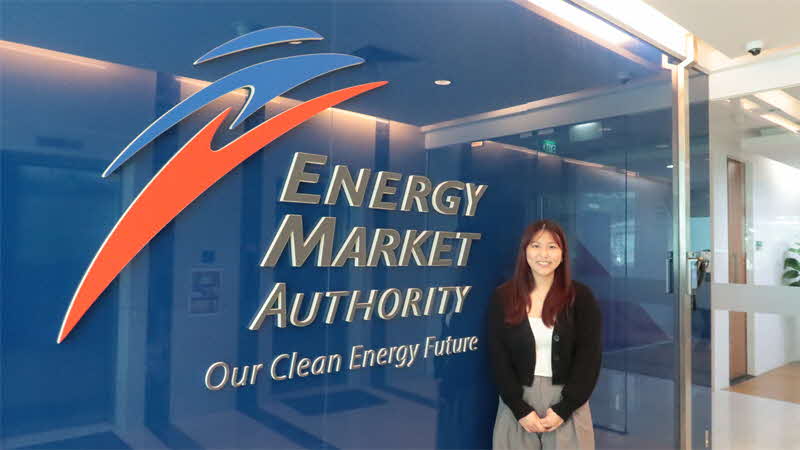
David Toh and Tiang Zi Hua, from EMA’s Nuclear Energy Office

At its core, nuclear energy works in a surprisingly familiar way.

David Toh, Engineer at EMA’s Nuclear Energy Office, explained, “Conventional power plants generate electricity by boiling water and using the steam to turn generators. What makes nuclear energy different is how that heat is produced. Instead of burning coal, or oil or gas, heat is produced by the splitting of atoms through a process called nuclear fission.”

This approach offers several advantages.

Firstly, unlike natural gas, nuclear power can generate electricity with very low carbon emissions during operations.

Secondly, nuclear fuel, which involves uranium atoms, is extremely “energy dense”.

“When you split a Uranium-235 atom, a type of uranium used as nuclear fuel, it releases a lot of energy,” said Tiang Zi Hua, Principal Engineer from the Nuclear Energy Office. “By volume, the uranium nuclear fuel is about 37 million times more energy dense than natural gas – the fuel that Singapore relies heavily on today.”

Nuclear fission chain reaction, where Uranium-235 atoms split to generate heat.

In simple terms, a small amount of nuclear fuel can go a very long way. That means less space is needed to store fuel, which is an important consideration for land-scarce Singapore. It could also strengthen energy security by reducing the amount of fuel that needs to be shipped and stored.

Price stability is another potential benefit. Natural gas prices can swing with global markets, which can affect electricity costs. For nuclear power, fuel is typically a smaller share of total costs, which can help keep prices more stable over time.

Addressing Common Concerns About Nuclear Power

When people hear the word “nuclear,” concerns about safety and radiation are often among the first thing that come to mind.

“Radiation is something we naturally encounter in our daily lives. We are exposed to natural background radiation from the sun, the air, the food we eat, and even medical procedures like X-rays,” Zi Hua said.

“On average, a person receives about 0.9 millisieverts (mSv) of natural background radiation each year. A millisievert is a unit used to measure radiation dose. In comparison, living near an operating nuclear power plant for a year would expose a person to an additional 0.001 millisieverts, which is roughly equivalent to the radiation dose from eating about 10 bananas,” Zi Hua said.

NEA

Source: NEA, Effective Radiation Dose, 2019 

______________________________________________________________________________________________________________

Another concern is nuclear waste. While nuclear energy does produce waste, most of it can be safely managed. Only a small portion is considered highly radioactive and is handled with strict safety measures.

David noted that the amount of spent fuel waste produced by a nuclear power plant is relatively small. “To put this in perspective, the spent fuel generated from powering one person's lifetime energy needs with nuclear energy could theoretically fit within a Coca-Cola can.”

Beyond waste management, nuclear energy technologies have evolved significantly in terms of safety and performance.

Older reactors relied more on “active” safety systems that require power and often human action to work. Newer designs increasingly use simple physical effects like gravity and natural circulation to keep the reactor cool, even if power is lost – also known as “passive” safety features.

In fact, Singapore is studying a new generation of nuclear technology known as Small Modular Reactors (SMRs).

Soruce: IAEA, "What are Small Modular Reactors (SMRs)?," 2023

The fundamental safety principle behind SMRs is that their smaller size could mean they contain less radioactive material, potentially making it easier to manage safety and control during an emergency. They are also designed with enhanced safety features that could help reduce the likelihood and impact of unlikely accidents.

This could allow regulators to set a smaller safety buffer zone, which refers to the area around a nuclear facility where emergency planning measures are in place. This is an important consideration for Singapore, where land is limited.

While SMRs could offer potential safety improvements, most projects globally are still at an early stage of development. This means more time is needed for the technology to mature, for operational experience to be built up, and for international safety standards and regulatory frameworks to develop further.

Comparison of safety buffer zones between a large reactor and SMR

Taking a Careful, Step-by-Step Approach

Despite its potential, Singapore has not made any decision on whether to deploy nuclear energy.

Instead, the focus now is on carefully studying whether nuclear energy can be a safe and viable option for Singapore.

For David and Zi Hua, this involves carefully evaluating different reactor designs and examining the assumptions behind them. The assessment process includes shortlisting suitable reactor designs, conducting detailed technical and safety studies, and working closely with international partners and experts to validate findings.

The work also extends beyond reactor technology. “Technology assessment is just the tip of the iceberg. There are many other supporting elements in the decision-making process, such as developing robust safety regulations, securing supply chains, and building up the necessary technical expertise in our workforce,” David shared.

On this front, Singapore is also learning from other countries and institutions, as many advanced nuclear energy technologies are still being developed and tested around the world.

Singapore is also preparing for an international review by nuclear infrastructure experts from the International Atomic Energy Agency. The aim is to assess Singapore’s ability to make an informed decision on whether advanced nuclear energy technologies could be deployed here in the future.

Looking Ahead

“Ensuring that any potential deployment is safe is fundamental to our approach and decision,” David emphasised.

Any decision on nuclear energy will only be made with a clear understanding of the associated risks and whether it makes sense for Singapore’s unique context.

As the energy landscape continues to evolve, keeping an open mind matters too, because the future of energy is not about relying on a single solution, but it is about exploring all viable options, carefully weighing the trade-offs, and finding the right mix to power Singapore forward.

And somewhere in that mix, nuclear energy may have a potential role to play.

Enjoyed this read?

Join our EMA website mailing list here to receive the latest stories and updates directly to your inbox. Stay informed about recent developments and content from EMA.


Tags

{{ event }}